
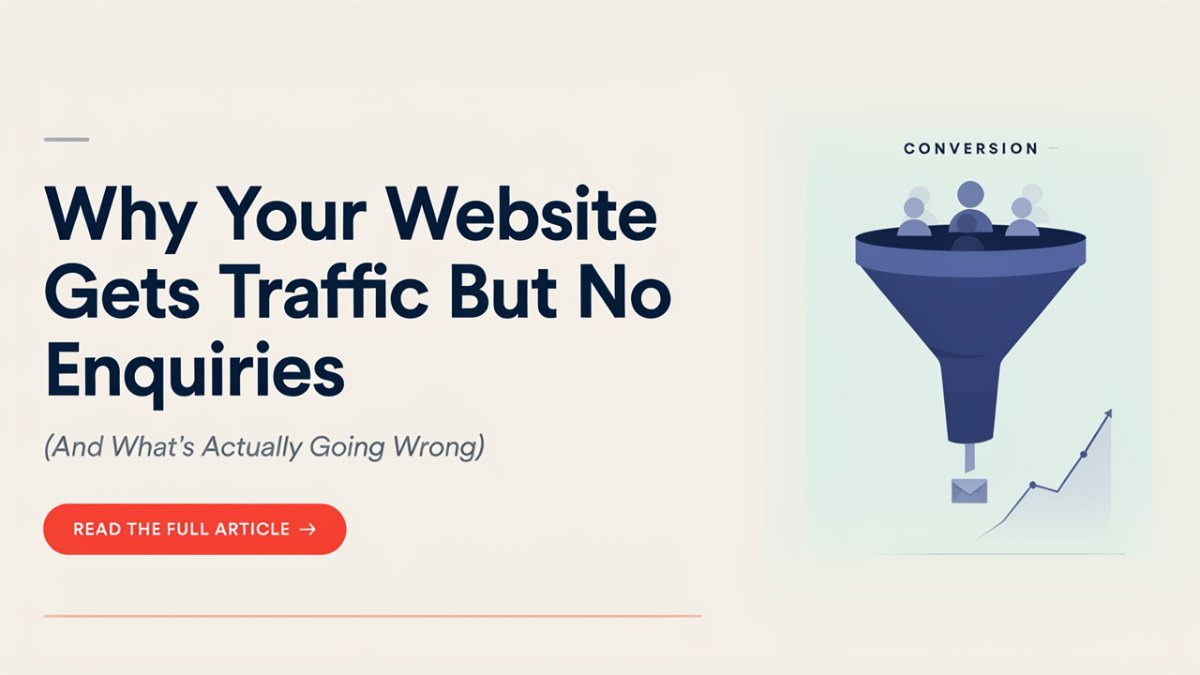
Traffic going up. Enquiries staying flat. If you’ve watched that gap widen in your analytics without a clear explanation, the problem is almost never the traffic itself.
Website traffic no leads is a conversion problem wearing a traffic metric as its disguise. The two need to be treated separately, or you end up optimizing the wrong thing.
If the obvious fixes haven’t moved anything, the issue may require a deeper look at your entire conversion funnel. This is where working with experienced lead generation companies in Pune like Skovian can help identify where potential customers are dropping off and what needs to change to turn existing traffic into genuine enquiries.
The Traffic You’re Getting Might Not Be the Traffic You Need
Not all visitors are equal. Five thousand sessions from people who were never going to buy produces a bigger website traffic with no leads gap than 800 sessions from the right ones.
The first question isn’t “why aren’t visitors converting?” It’s “who are these visitors and what were they actually looking for?”
According to a 2023 HubSpot report, only 4% of website visitors are ready to buy on a first visit. The rest are researching options or trying to work out if they even have the problem you solve. A site built only for the 4% loses the other 96% before they’ve decided anything.
Lead conversion rate optimization starts before page layout or CTA copy. It starts with whether the content matches what those people were actually looking for.
What Visitors Actually Do When They Land on Most Business Websites
Most business websites are built to impress, not to answer.
They lead with a values tagline and a banner that looks good on a laptop. The visitor arrived from a Google search with a specific question. The site handed them a presentation. That visitor leaves. Not because your product is wrong, but because nothing on the page told them you understood their problem fast enough.
Converting website visitors to leads means building pages around what someone is thinking when they arrive, not what you want them to think. Those are different briefs, and most sites are written for the second one.
The Four Reasons Most Websites Fail to Convert Traffic
These aren’t theories. They’re the same four things that come up consistently when businesses look properly at why their traffic isn’t generating enquiries.
- The wrong pages are ranking. Blog posts and informational articles pulling in traffic for people who are researching, not buying, will produce low conversion rates no matter how good the site is. If your highest-traffic pages aren’t your services or product pages, the mismatch is structural.
- The offer isn’t clear enough. Visitors need to understand within seconds what you do, who it’s for, and what they should do next. If those three things require reading three paragraphs to piece together, most people won’t wait.
- There are too many options or none at all. Seven CTAs pointing in different directions produce paralysis. One clear next step, matched to where the visitor is in their decision, converts far better than either extreme.
- The trust signals are missing or buried. Reviews, case studies, and specific results do the work. “We deliver excellent service” earns nothing. “We grew inbound enquiries by 97% for a hospitality client” earns a click.
How Does Lead Conversion Rate Optimization Actually Work in Practice?
This isn’t a one-time project. It’s a cycle: look at what’s coming in, understand where people drop off, make a specific change, measure what happens.
The most productive place to start is usually a heatmap and session recording tool, because it shows what real visitors are doing rather than what you assume they’re doing. Most businesses are surprised. The section they spent three weeks perfecting gets skipped. The one thing they added as an afterthought gets clicked on constantly.
The changes tend to be smaller than expected. A headline that names the outcome the visitor wants. A CTA that offers a low-commitment first step. A case study on the right page. None of these require a redesign, and most can be tested in days.
Getting more enquiries from the same traffic doesn’t require a redesign. It requires understanding where visitors are dropping out, and closing those gaps one by one.
The Fix Is Closer Than You Think
Most businesses with a lead conversion rate optimization problem don’t need a new website. They need a clear look at what’s already there and a small number of targeted changes to the pages that matter most.
The traffic is doing its job. The gap is on the site, and that’s fixable without spending more on ads or SEO until the foundation works.
This is a process, not a one-time fix. If you want someone to identify where the actual leak is, that’s where Skovian starts. Get in touch.
FAQ’s
Traffic Without Conversion Is Just a Number. Here’s What to Do About It.
Getting visitors to your site and getting them to reach out are two different jobs. Most businesses treat them as one, which is why the analytics look healthy and the inbox doesn’t.
Better lead conversion rate optimization lifts the return on every channel at once: SEO, paid, referrals, all of it. The businesses that get this right stop asking why their traffic isn’t converting.
Recent Posts
- Why Your Website Gets Traffic But No Enquiries (And What’s Actually Going Wrong)
- Why Your Business Isn’t Showing Up on Google Maps (And How to Fix It)
- How Manufacturing Companies Can Use Digital Marketing to Win More B2B Clients
- How Professional SEO helps Manufacturing Companies Win More High-Value Clients
- Why Fast-Growing Businesses Invest in Professional Website Development Services