Traffic is going up. The monthly report looks fine. But the enquiries aren’t moving.
This happens more than most agencies will admit. SEO and lead generation get treated as the same thing when they’re actually two separate problems. Ranking higher on Google is one outcome. Turning that visibility into actual enquiries is another. Lead generation SEO services are built to solve both, but most businesses only realise the difference after they’ve paid for the version that solved only one.
Skovian is a seo company in pune that has spent over a decade working backwards from one question before starting any campaign: what does your buyer need to see before they trust you enough to reach out?
What Skovian Does Before Writing a Single Page?
Most SEO work starts with keywords. Skovian’s starts with buyers.
Before anything gets optimised, the questions that matter are: who is actually making the purchasing decision in your industry? What do they search at the beginning of their research, and what do they search right before they’re ready to contact someone? Which pages on your site are already pulling in traffic but losing people before they enquire?
Those answers shape everything else. The keyword list, the content structure, the calls to action, the pages that get built first. Lead generation for SEO done properly is a strategy built backwards from the outcome, not a checklist run forwards from a crawl report.
Most SEO problems that look like a traffic problem are a conversion problem sitting one step further down. Getting that diagnosis right before spending a single hour on optimisation is the difference between SEO that moves a business forward and SEO that moves a report upward.
The Kind of SEO That Actually Converts
There is a version of SEO that gets you to page one for five keywords and stops there. Traffic comes in, the ranking report looks good, and somewhere in the background a business owner is still waiting for their enquiry volume to change.
The problem is not always the rankings. It is which searches are being targeted and what a visitor finds when they arrive. A site that ranks well for broad, early-stage searches will pull in a lot of people who are still months away from making a decision, or who were never going to buy at all.
Lead generation SEO companies that produce real results target the searches people make when they are closer to choosing. Not just “what is X” but “best X for Y industry” or “X company near me” or “how much does X cost.” These are the searches that convert. Building content around them, then making sure the pages those visitors land on give them a clear reason to get in touch, is what turns a well-ranking site into one that actually generates business.
Skovian’s work across real estate, healthcare, manufacturing, education, and hospitality is built on this principle. The industries are different. The buying journey in each one is specific. But the pattern holds: buyers research for a while before they reach out, across multiple searches and sometimes multiple weeks. An SEO strategy that only shows up for one search in that window is doing a fraction of the work it could.
Why Does the Industry You’re In Changes Everything?
A hospital and a manufacturing company selling industrial equipment have almost nothing in common, except that their buyers both research online before making contact. The searches are different, the decision timelines are different, the trust signals are different, and the content that moves someone from reading to enquiring is different.
Lead generation SEO company work that ignores this produces content that ranks for searches nobody who matters is actually making. Generic strategies attract generic traffic, and generic traffic does not fill a sales pipeline.
Skovian’s brief for every client starts with the buyer, not the keyword list. What does the person making this purchasing decision actually search? What objections come up before they commit to a conversation? What does your site need to show them that your competitors aren’t showing? The SEO strategy gets built backwards from those answers. That is why the results tend to look different from what most businesses have experienced before.
You can see what that approach looks like across different industries in Skovian’s case studies.
The Long-Term Case for Organic Leads
Organic search takes time to build. Three to six months is honest. That timeline makes some business owners hesitant, especially when paid advertising can start producing clicks the same day.
But the comparison that matters is not speed. It’s cost per lead over two or three years. Paid advertising delivers leads only as long as the budget runs. Organic rankings, once earned, keep producing enquiries without additional spend. A page that ranks well today will still be driving contact requests eighteen months from now, with no budget attached.
This is the real case for lead generation SEO services as a long-term investment. Businesses that treat it that way, building consistently rather than starting and stopping, tend to end up in positions their competitors find hard to displace. The ones that stop hand that ground back to whoever kept going.
Skovian is a Google-certified team and Meta Managed Partner that has worked with over 4,000 advertisers across organic and paid channels. For clients where organic SEO and paid advertising run in parallel, both are managed with reporting tied to lead outcomes, not just platform metrics.
Ready to Turn Your Search Traffic Into Real Enquiries?
If your traffic is growing and your enquiries are not, you are not alone. And the fix is usually not more traffic. It’s building the right kind of visibility, for the right searches, with pages that give people a reason to act.
That is what lead generation for SEO looks like when it is built around your industry and your buyer, not a generic content calendar.
You do not need a finished brief or a polished plan to start. Most of Skovian’s engagements begin with a straightforward audit: what is the site currently doing, where is it falling short, and what would a realistic SEO strategy look like for your goals? Get in touch with Skovian and start with that conversation.
| Traditional SEO | AI Search Engine Optimization | |
|---|---|---|
| Primary goal | Rank in Google’s top 10 | Get cited in AI-generated answers |
| Content style | Keyword-rich pages | Question-answering, structured content |
| Where it shows up | Google search results | ChatGPT, Perplexity, AI Overviews, Gemini |
| Authority signals | Backlinks, domain rating | Cited statistics, clear structure, named sources |
| Result timeline | 3 to 6 months typically | Weeks for structured content changes |
These are not competing strategies. They are complementary ones. A well-structured page that ranks well on Google is significantly more likely to be cited by an AI platform. The two reinforce each other when built together.
The businesses pulling ahead right now aren’t debating AI SEO vs traditional SEO. They’re running both.
Where Most Businesses Are Actually Losing Ground?
Here is what a typical buyer journey looks like in 2026, and where the gap appears:
A business owner searching for a manufacturing SEO solution might start on Google (traditional SEO handles this), then open ChatGPT to ask “which SEO approach works best for B2B manufacturers?” (this is where AI search engine optimization determines whether you appear), and then check two or three agencies before making contact.
If you show up in step one but disappear in step two, you’ve done most of the work and missed the moment that mattered.
This is the exact problem a good ai seo agency is built to solve. It is not about abandoning what works on Google. It is about making sure your content is structured to show up at every point of the journey, not just the first one.
Most ai seo company teams that do this well start with a simple content audit: which pages answer real questions directly, and which ones talk around them? The pages that talk around questions rank on Google and vanish in AI answers. The pages that answer directly do both.
How Skovian Approaches AI SEO vs Traditional SEO?
Skovian does not treat AI SEO vs traditional SEO as a choice clients have to make. The strategy is built to cover both, because leads come from both.
On the traditional SEO side, Skovian works across keyword research, technical audits, on-page optimisation, and link building — the fundamentals that build Google authority over time. On the ai search engine optimization side, the focus is on content structure: direct answers, cited data, FAQ sections, and formatting that AI platforms can extract and reference.
The results across Skovian’s client base span real estate, healthcare, education, manufacturing, and hospitality — industries where buyers research extensively before making contact and where being visible at every stage of that research is what drives enquiries.
As an ai seo company with over a decade of experience, Skovian’s approach is not about chasing the newest tactic. It is about building the kind of presence that compounds — rankings that grow, and citations that appear when buyers are closest to a decision.
Ready to Show Up Where Your Buyers Are Actually Searching?
The AI SEO vs traditional SEO debate tends to distract from the real question: is your business visible at every point in the buyer’s journey, or just one part of it?
In 2026, buyers move across platforms fast. They Google first, ask AI next, and decide based on who kept showing up. If your strategy only covers Google, you’re present for one out of three moments that matter.
Reach out to Skovian about building a search strategy that covers both — and closes the gap where most businesses are quietly losing ground.
FAQ’s
Traditional SEO is about ranking in Google’s search results through keywords, backlinks, and technical site health. AI search engine optimization is about structuring content so AI platforms like ChatGPT, Perplexity, and Google AI Overviews extract and cite it directly. One gets you found on Google. The other gets you mentioned when buyers skip Google and ask an AI instead.
Because Google rankings and AI citations are decided differently. AI platforms pull from content that answers questions directly, cites sources, and uses clean structure. A page can rank number one on Google and still be invisible in AI-generated answers if it is written to rank rather than to answer. That is the gap AI search engine optimization is designed to close.
Yes, and it is not even close. Google still handles the majority of the world’s search traffic. Traditional SEO builds the domain authority that AI platforms also use to decide which sources to trust. The two strategies share a foundation, and dropping one weakens the other.
Businesses where buyers research before buying: real estate, healthcare, manufacturing, education, hospitality. In these sectors, buyers often spend weeks across multiple platforms before making contact. Being present on Google and inside AI answers across that research window is what drives enquiries.
Recent Posts
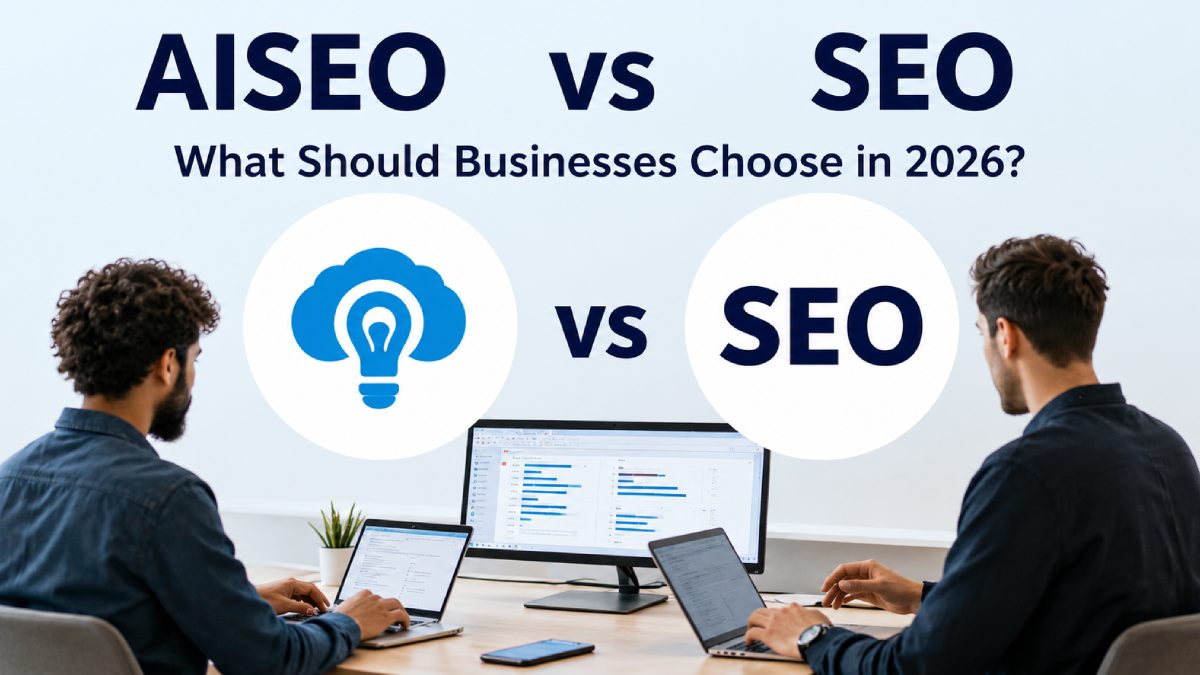
- AI SEO vs Traditional SEO: What Should Businesses Choose in 2026?
- How Skovian’s SEO Services Help Businesses Rank Higher on Google and Generate More Leads
- Web Development in 2025: Emerging Trends You Need to Know
- Why Your SEO Strategy Needs Generative Engine Optimization Now
- From SEO to AEO: The Future of Getting Found Online